Trauma & PTSD

Find Safety and Healing | Trauma Therapy
Trauma & PTSD
Trauma can leave a lasting imprint that affects your mind, body, and spirit. It can feel like:
- Always on Alert: Feeling constantly on edge, irritable, easily startled, or unable to relax.
- Reliving the Past: Unwanted, intrusive memories, nightmares, or flashbacks.
- Numbness & Disconnection: Shutting down emotionally, feeling detached from others or your own body.
- Avoidance: Going out of your way to avoid people, places, or thoughts that remind you of the trauma.
- Negative Self-Beliefs: Intense feelings of shame, guilt, or a belief that you are permanently broken.
- Physical Symptoms: Chronic pain, stomach issues, or headaches without a clear medical cause.
In clinical terms, we might discuss:
Post-Traumatic Stress Disorder (PTSD)
A diagnosable condition that can develop after exposure to a terrifying event where harm occurred or was threatened.
Complex PTSD (C-PTSD)
Results from prolonged, repeated trauma, often including difficulties with emotional regulation and self-concept.
The Nervous System in Survival Mode
Trauma can keep your body's fight-flight-freeze-fawn response stuck in the "on" position.
Triggers
Sensory reminders (a sound, smell, sight) that unconsciously activate the trauma response.
How we deal with it in therapy together:
Establishing Safety & Stabilization
The first and most crucial step: building a toolbox of coping skills and grounding techniques.
Cognitive Processing Therapy (CPT)
Identifying and challenging negative beliefs the trauma created to reduce their debilitating power.
Narrative Therapy
Gently exploring the story of your trauma to help separate your identity from what happened to you.
Somatic (Body-Based) Techniques
Learning to listen to and release the trauma held in the body, helping to regulate the nervous system.
Reconnection
Supporting you as you rebuild a sense of self and re-engage with life based on your values, not your trauma.
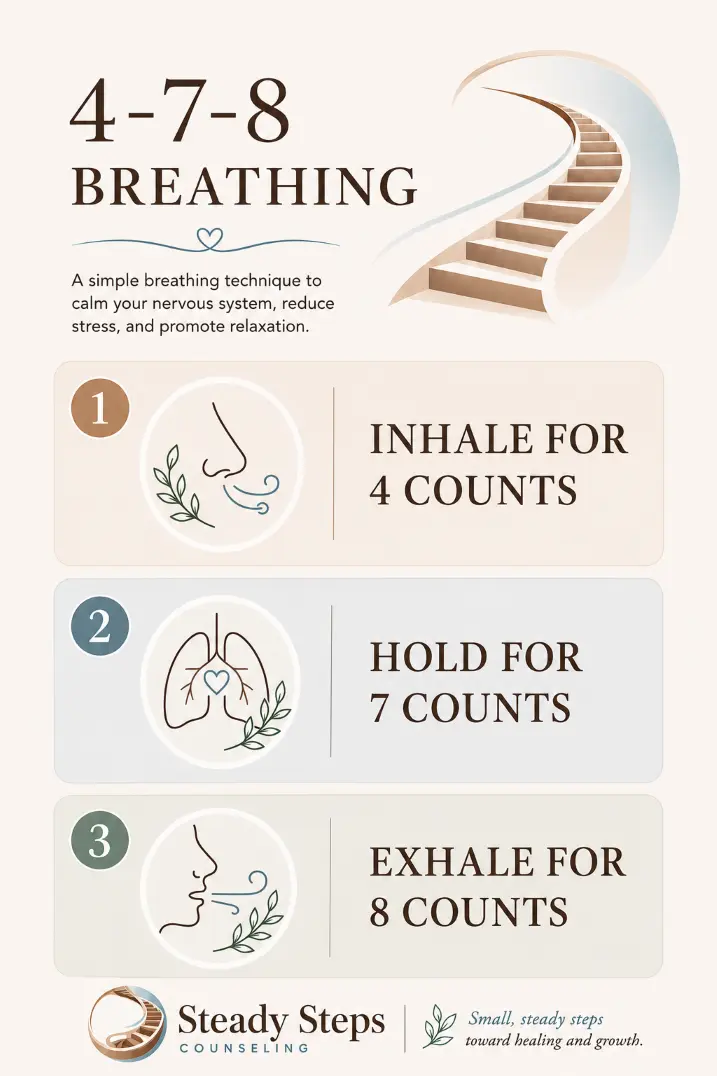
A Little Something to Help You Now: The 4-7-8 Breathing Technique
Inhale quietly through your nose for 4 seconds. Hold your breath for 7 seconds. Exhale completely through your mouth for 8 seconds. Repeat 3-4 times. This technique activates the parasympathetic nervous system, helping to calm the body's stress response.